
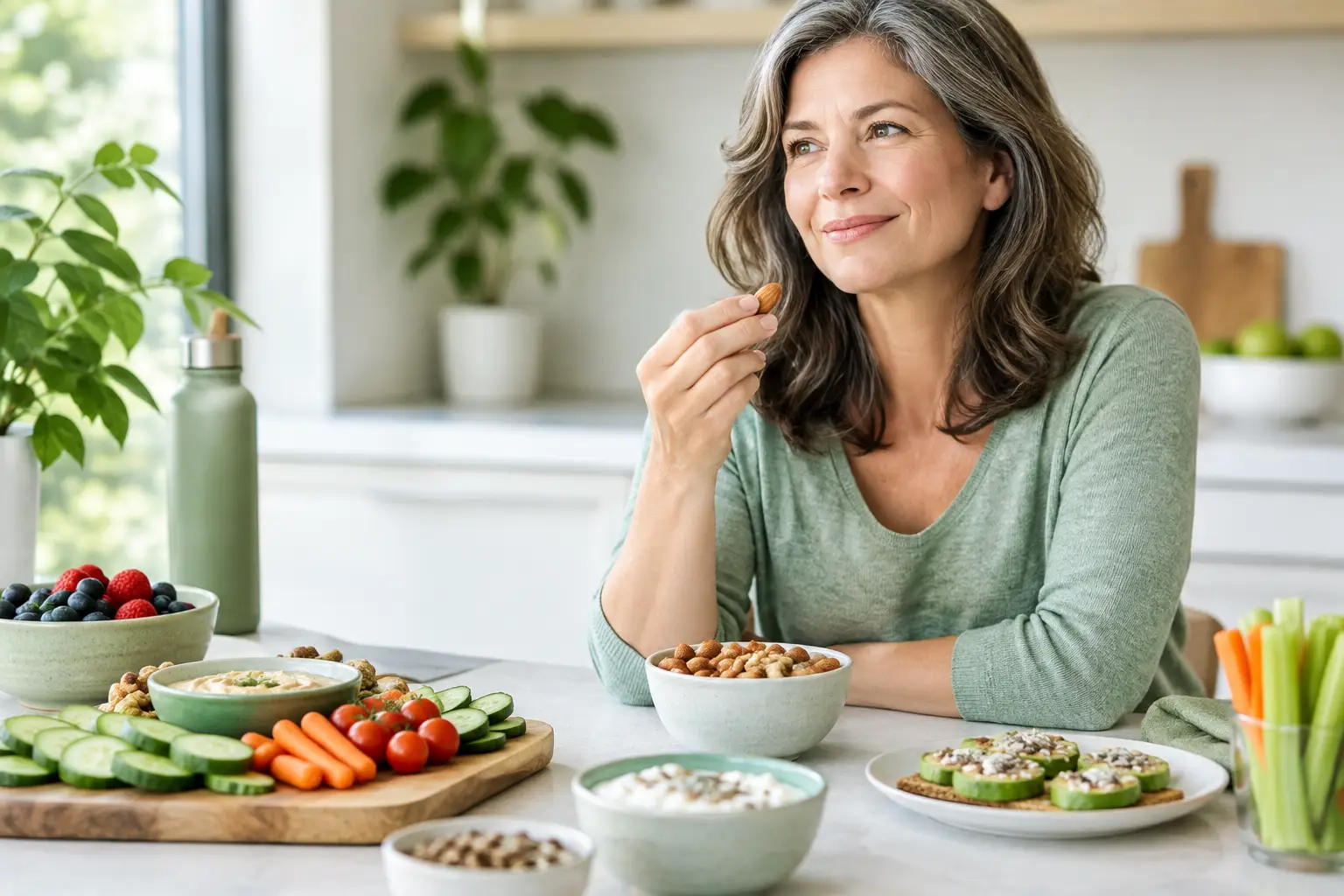
A handful of crackers may not keep you satisfied until your next meal. When hormones, sleep, appetite, and energy can all feel less predictable, knowing how to plan menopause snacks can make the afternoon or evening feel a little more steady - without turning food into another project to manage.
The goal is not to eat perfectly or follow a restrictive menopause diet. It is to build snacks with enough protein, fiber, and satisfying fat that they do more than fill a gap between meals. Think of them as small meals with a job: helping you arrive at your next meal comfortably hungry, not ravenous. Snacks are optional; if your meals keep you satisfied, you do not need to add one simply because you are in menopause.
Why menopause snacks may need a new approach
During perimenopause and menopause, changing estrogen levels can coincide with shifts in body composition, sleep, hunger cues, and how satisfying familiar meals feel. Age-related muscle loss also becomes more relevant after 40, which makes regular protein intake worth paying attention to.
That does not mean every craving is a hormone problem, or that one snack can control symptoms. Hot flashes, sleep disruptions, medications, stress, meal timing, and personal food tolerances all matter. But snack composition is one practical lever you can use without calorie counting.
A snack built mostly from refined carbohydrates - think pretzels, candy, sweet coffee drinks, or a plain granola bar - can be convenient but may not be very filling on its own. Pairing carbohydrates with protein, fiber, or fat generally creates a more substantial snack and can help make eating patterns feel less reactive.
How to plan menopause snacks in three steps
1. Start with a protein anchor
A protein source is a practical place to begin because it can support fullness and contributes to the daily protein your body uses to maintain muscle. You do not need to chase a perfect number at every snack. Instead, ask a simple question: what is the protein here?
That might be plain Greek yogurt, cottage cheese, a hard-boiled egg, edamame, tuna, roasted chickpeas, tofu, a glass of milk, or leftovers from dinner. If you use a protein shake, look at it as one option rather than a requirement. Choose one you enjoy and that fits your usual eating pattern.
Including a clear protein source can make a snack more substantial, especially when there is a long stretch between meals. Your needs depend on your overall diet, activity level, health history, and appetite. If you are unsure about a personal protein target, a registered dietitian can help.
2. Add fiber-rich produce or a high-quality carbohydrate
Fiber helps snacks feel more substantial and supports digestive health. Fruits, vegetables, beans, whole grains, nuts, seeds, and legumes all contribute. The key is not to avoid carbohydrates. It is to choose carbohydrates that bring more to the plate than quick sweetness or crunch.
Try apple slices with peanut butter, berries stirred into Greek yogurt, a pear with a few walnuts, or whole-grain crackers with cottage cheese. Hummus with bell pepper strips works well, too. If raw vegetables are not appealing, use cooked vegetables or a small cup of vegetable soup. The best snack is one you will actually eat consistently.
If constipation is an issue, increase fiber gradually and drink enough fluids. Adding a large amount of fiber all at once can feel uncomfortable, especially if your current intake is low.
3. Include a satisfying fat or flavor element
Healthy fats can improve satisfaction and make a snack feel less like a compromise. Avocado, nuts, seeds, olives, peanut butter, and olive-oil-based dips are useful choices. They are also calorie-dense, but that is not a reason to fear them. It simply means a modest portion often goes a long way.
Flavor matters just as much. Cinnamon in yogurt, everything seasoning on cottage cheese, chili-lime seasoning on mango, or a square of dark chocolate alongside nuts can make a balanced snack feel enjoyable. A plan that leaves no room for pleasure rarely lasts.
Practical snack combinations for busy days
The easiest menopause snacks usually rely on foods you already buy for meals. Rather than creating a separate shopping category called “healthy snacks,” combine two or three foods from your refrigerator, pantry, or freezer.
Here are options that include a protein anchor plus fiber, fat, or both:
- Plain Greek yogurt with berries, chia seeds, and cinnamon
- Cottage cheese with pineapple, peaches, or sliced tomatoes
- Apple or banana with peanut butter and a glass of milk
- Hummus with baby carrots, cucumbers, or whole-grain pita
- Edamame with a piece of fruit
- Whole-grain crackers topped with tuna or salmon, with optional mashed avocado
- A hard-boiled egg with grapes and a handful of pistachios
- Leftover chicken or tofu wrapped in lettuce with a little avocado
- Roasted chickpeas paired with an orange or clementine
- A small bowl of lentil soup with whole-grain toast
Some snacks will be more filling than others, and that is useful information. A midmorning snack before a late lunch may need more substance than something you eat an hour before dinner. Let context decide the portion, not a rigid rule.
Plan for the moments when snacks matter most
A good snack plan is less about willpower than reducing friction. Identify the two times of day when hunger tends to catch you off guard. For many people, it is the midafternoon meeting stretch or the period after dinner when fatigue feels like hunger.
Keep two shelf-stable options where you need them, such as at work or in a bag. Follow package storage instructions, and keep perishable snacks refrigerated or in an insulated bag with ice packs. Nuts, roasted edamame, single-serve tuna packets, high-fiber crackers, and unsweetened protein powder can help when fresh food is unavailable. Then keep two refrigerator options ready at home, such as yogurt cups, eggs, cut vegetables, cottage cheese, or individual hummus containers.
It also helps to distinguish physical hunger from a need for rest, comfort, or a break. Neither experience is wrong. If you want a snack, eat one without judgment. If you notice you are depleted rather than hungry, a glass of water, five quiet minutes, or an earlier bedtime may be the more supportive response.
Consider common menopause-related food triggers carefully
Some people notice that alcohol, caffeine, spicy foods, or very hot drinks coincide with hot flashes or sleep disruption. Others notice no clear connection. There is no universal trigger-food list, so broad restriction is usually unnecessary.
Instead, look for your own patterns over a few weeks. Notice what you ate, the timing, and what else was happening that day, including stress and sleep. If a late coffee consistently affects sleep, swapping it for decaf or herbal tea may be worthwhile. If an evening glass of wine seems to leave you less rested, experiment with alcohol-free nights. The point is curiosity, not food rules.
Use meal feedback without turning it into another food diary
Snack quality can be hard to judge when packages make every product sound healthy. A bar may contain some protein but very little fiber. Trail mix may be satisfying, but its portion can be easy to lose track of when eaten from a large bag. For packaged snacks, compare protein, fiber, added sugars, and sodium using the Nutrition Facts label and a similar serving size. There is no need to label either food “good” or “bad.” Look at the full combination and decide what would make it more satisfying.
BioNavs provides an estimated meal-quality score from 0–100 based on your meal description. It highlights strengths to keep and suggests practical improvements. You may use that feedback to consider adding fruit to yogurt, vegetables to crackers and hummus, or a protein source to a light snack.
The score is not a medical measurement. BioNavs does not measure blood glucose, hormones, menopause symptoms, or your individual response to food. Its value is in helping you review protein, fiber, and overall meal composition without logging every gram.
Sources & Further Reading
- Heart Health, The Menopause Society.
- Using the Nutrition Facts Label: For Older Adults, U.S. Food and Drug Administration.
- Dietary Guidelines for Americans, 2025–2030, U.S. Departments of Agriculture and Health and Human Services.
- Menopause, MedlinePlus, U.S. National Library of Medicine.
A well-planned snack does not need to be impressive. It just needs to meet you where your day gets demanding. Try BioNavs to review the quality of an everyday snack and identify one practical improvement—without calorie counting. Learn more with the BioNavs site.