
A turkey sandwich, chips, and a soda can look like a quick lunch. So can a turkey sandwich on whole-grain bread with avocado, crunchy vegetables, fruit, and sparkling water. Neither requires a food scale or a long list of rules, but the second meal has a different mix of protein, fiber, and fats - the ingredients that often make a meal more satisfying and nutritionally complete.
Learning to build balanced plates is not about making every meal look perfect. It is about seeing what is already on your plate, noticing what may be missing, and making one realistic adjustment at a time. For adults over 40, that approach can be especially useful as priorities shift toward preserving muscle, staying comfortably full between meals, and eating in a way that works on ordinary weekdays.
What a balanced plate actually means
A balanced plate combines foods that do different jobs. Protein contributes amino acids used throughout the body and becomes increasingly important with age because muscle mass and strength naturally tend to decline over time. Fiber-rich foods, including vegetables, fruit, beans, and whole grains, support digestive health and tend to add volume and staying power to meals. Unsaturated fats from foods such as olive oil, nuts, seeds, avocado, and fatty fish bring flavor and help meals feel complete.
Carbohydrates belong on the plate, too. They are not a nutritional mistake. The more useful question is whether the carbohydrate source comes with fiber and whether the meal also includes enough protein and produce. A bowl of sweetened cereal by itself may leave you looking for a snack soon after. Pair it with Greek yogurt, berries, and walnuts, and the same morning can feel far more grounded.
There is no single proportion that fits every person, every culture, or every meal. Hunger, activity level, medical needs, budget, food preferences, and schedule all matter. Think of a balanced plate as a flexible framework, not a test you can fail.
A simple way to build balanced plates
Start with a protein anchor. At breakfast, that might be eggs, cottage cheese, plain Greek yogurt, tofu scramble, or leftover chicken. At lunch or dinner, try fish, chicken, turkey, beans, lentils, tempeh, lean beef, or edamame. The goal is not to chase a precise gram target at every meal. It is to make protein visible instead of letting it become an afterthought.
Next, add color and fiber. A big salad is one option, but it is hardly the only one. Frozen broccoli, roasted carrots, sautéed greens, black beans, an apple, berries, or a microwaved bag of mixed vegetables all count. If you are currently having vegetables once a day, moving to twice a day is meaningful progress.
Then choose a carbohydrate that matches the meal. Potatoes, rice, corn tortillas, oats, whole-grain pasta, quinoa, and bread can all have a place. When practical, choose versions with more fiber or pair them with beans, vegetables, or fruit. This is not about banning white rice or regular pasta. It is about avoiding the all-too-common plate where a refined starch is doing nearly all the work.
Finish with a source of healthy fat or a flavorful dressing. Olive oil on vegetables, avocado in a burrito bowl, nuts on oatmeal, tahini with roasted vegetables, or a salmon fillet can make a meal more satisfying. Fat is calorie-dense, so portions can matter for some goals, but it does not need to be feared or eliminated.
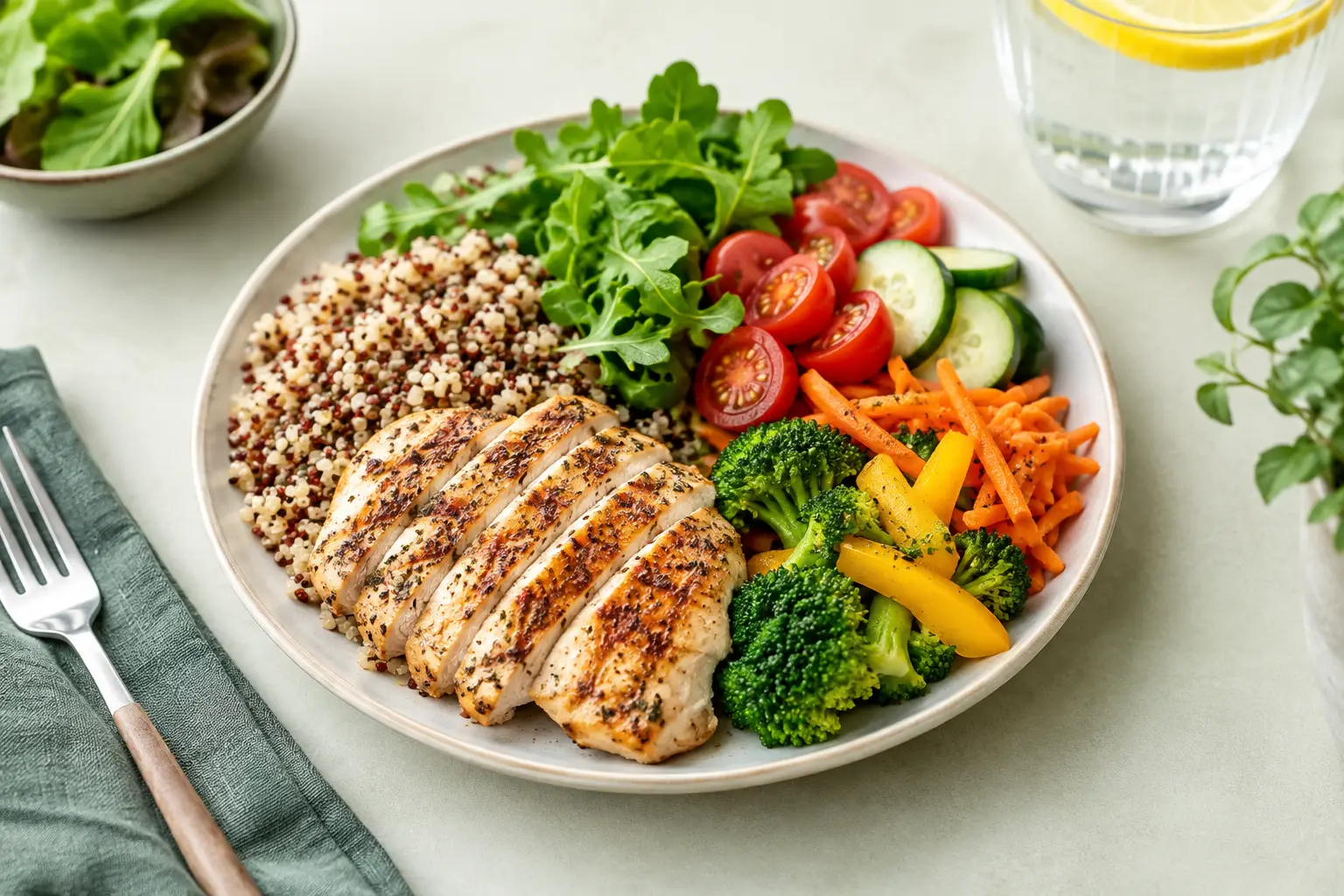
A helpful visual is to make roughly half the plate produce when that is realistic, reserve about a quarter for protein, and use the remaining space for a fiber-forward carbohydrate or starchy vegetable. Add fat where it naturally fits. This familiar plate method is a starting point, not a mandate. Chili, soups, tacos, stir-fries, and sandwiches do not arrive in neat sections, and they can still be well balanced.
What this looks like with real meals
Consider a few everyday upgrades. Instead of plain oatmeal made with water, make oats with milk or soy milk, berries, chia seeds, and Greek yogurt on the side. Instead of a salad that leaves you hungry an hour later, add chicken or chickpeas, a grain, and olive oil-based dressing. Instead of takeout pasta alone, add a side of vegetables and a protein such as shrimp, chicken, or white beans.
At dinner, a plate of grilled chicken, roasted potatoes, and green beans is balanced without being complicated. So is a bean-and-vegetable burrito bowl with brown rice, salsa, avocado, and plain yogurt. At a restaurant, you may not control every ingredient, but you can often add a vegetable side, choose a protein-forward entrée, or split a large starch-heavy portion.
Why balance can matter more after 40
Nutrition gets less forgiving when meals are built mainly around convenience carbohydrates and little else. That does not mean you need a restrictive plan. It means the basics become more valuable: enough protein across the day, regular fiber-rich foods, and meals substantial enough to reduce the cycle of skipping meals and grazing later.
Protein deserves particular attention. Research suggests older adults may benefit from distributing protein across meals rather than concentrating most of it at dinner. The right amount varies based on body size, activity, kidney health, and guidance from a qualified clinician, especially if you have a health condition. Still, the practical takeaway is simple: ask whether breakfast and lunch contain a meaningful protein source, not just dinner.
Fiber is another quiet workhorse. Most Americans do not meet recommended fiber intake. A sudden major increase can cause digestive discomfort, so build gradually and drink enough fluids. Start by adding one fiber-rich food you already enjoy: beans to soup, berries to breakfast, vegetables to a frozen pizza, or a pear alongside an afternoon snack.
For women in perimenopause or menopause, changing appetite, sleep, and body composition can make old eating habits feel less reliable. A steadier meal structure centered on protein, plants, and satisfying fats can be more useful than cutting entire food groups. For everyone, a balanced plate supports a consistent routine without turning food into another job.
The trade-offs that make healthy eating realistic
A perfectly balanced lunch is not always available at an airport, in a work meeting, or during a hectic family week. In those moments, aim for the next best option. A deli sandwich can become more complete with fruit and a side salad. A drive-through breakfast can include an egg-based sandwich and fruit if available. A frozen entrée can be paired with microwaved vegetables and a handful of nuts.
Cost matters, too. Fresh salmon and specialty grains are not required. Eggs, canned tuna, canned salmon, peanut butter, beans, lentils, frozen produce, oats, potatoes, and store-brand plain yogurt can support balanced meals at a lower cost. Convenience also counts as a real nutrition tool when it helps you eat more consistently.
Do not confuse a balanced plate with a small plate. If you are genuinely hungry after a meal, you may need more food, especially more protein, fiber, or both. On the other hand, if a large restaurant meal leaves you uncomfortably full, saving part for later can be a practical adjustment. Your own hunger, fullness, energy, and preferences provide useful context that no generic plate diagram can replace.
Use meal feedback without turning eating into homework
Memory is unreliable, especially when life is busy. You may remember the salad but forget it had no protein, or remember the chicken but not notice the meal was short on plants and fiber. Brief meal feedback can make patterns easier to see without logging every ingredient or counting every calorie.
BioNavs is designed for that middle ground. Describe what you ate in everyday language, receive an AI-powered meal-quality score and practical composition insights, then decide what one change would make the next meal more balanced. It is not another food diary, and the score is not a medical measurement. It is a prompt to look for patterns - like protein-light breakfasts or lunches that could use more fiber - without guesswork.
The most useful balanced plate is the one you can make again next week. Keep a few repeatable meals in your rotation, make upgrades when they are easy, and leave room for the meals that are simply enjoyable. For a clearer look at the composition of your everyday meals, Try BioNavs, an AI-powered meal-analysis tool that turns a quick description into practical nutrition insights.
Sources & Further Reading
- MyPlate Plan, U.S. Department of Agriculture. https://www.myplate.gov/myplate-plan
- Dietary Guidelines for Americans, 2020-2025, U.S. Departments of Agriculture and Health and Human Services. https://www.dietaryguidelines.gov/resources/2020-2025-dietary-guidelines-online-materials
- Protein Intake and Exercise for Optimal Muscle Function with Aging: Recommendations from the ESPEN Expert Group, Clinical Nutrition. https://pubmed.ncbi.nlm.nih.gov/24814383/
- Dietary Fiber: Essential for a Healthy Diet, Harvard T.H. Chan School of Public Health. https://nutritionsource.hsph.harvard.edu/carbohydrates/fiber/
BioNavs supports informed wellness choices. Explore the BioNavs site.