
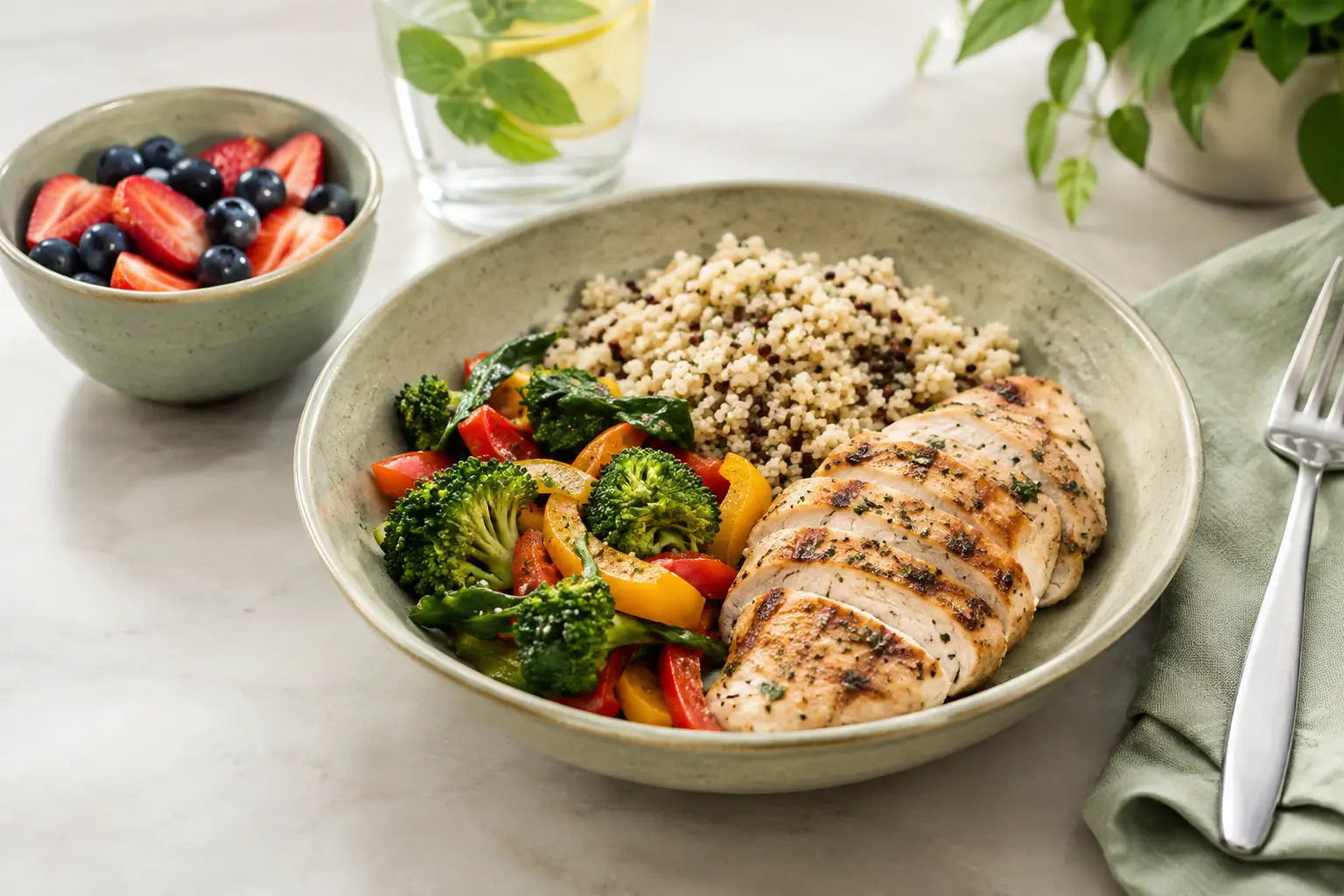
To pair carbs and protein, combine a carbohydrate food such as oats, bread, rice or fruit with a protein source such as eggs, yogurt, fish, tofu or beans. Consider vegetables, fiber and portion sizes as part of the whole meal rather than aiming for a fixed ratio. This is a flexible meal-building approach, not a guarantee of steady energy or a prediction of your blood glucose response.
Review a meal with BioNavs: describe the meal and select a goal for an estimated meal-quality score and practical suggestions.
How to Pair Carbs and Protein Without Overthinking It
Start by identifying the main carbohydrate in your meal. It might be toast, oatmeal, rice, pasta, potatoes, fruit, beans, corn tortillas, or crackers. Then add a meaningful protein source rather than treating protein as an afterthought.
At breakfast, oatmeal can pair with eggs on the side, cottage cheese, Greek yogurt, or milk plus nut butter. At lunch, a turkey sandwich gets more substance from a generous portion of turkey and a side of fruit or vegetables. At dinner, rice or roasted potatoes can sit alongside salmon, chicken, tofu, lentils, or lean beef.
This does not mean every meal needs to look like a fitness meal. Pizza can be paired with a big salad and a protein-rich topping. Pasta can include chicken, shrimp, turkey meatballs, white beans, or lentils. A banana can become a more complete snack with peanut butter or a cheese stick. The pairing matters more than chasing a rigid food rule.
Think in meal components, not food categories
Carbohydrates are not one thing. A cinnamon roll, an apple, black beans, and brown rice all contain carbohydrates, but they bring very different amounts of fiber, nutrients, and fullness. Protein foods vary, too: salmon, plain Greek yogurt and protein bars have different nutrient profiles. Convenience foods can fit; compare ingredients and nutrition labels rather than judging by the word “protein.”
A helpful default is to combine a carbohydrate food with a protein food, then look for an opportunity to add color, fiber, or healthy fat. You do not need all four elements at every meal, but this framework can quickly improve a plate that otherwise feels incomplete.
For example, toast with jam is mostly carbohydrate. Toast with eggs, avocado, and sliced tomato has carbohydrate, protein, fat, and produce. Neither meal is morally good or bad. The second simply has more components that tend to make a meal feel substantial.
Why This Pairing Can Matter More After 40
Nutrition needs vary with health, activity and age; turning 40 does not create a single new protein requirement. Protein-containing foods and muscle-strengthening activity are both relevant to maintaining strength as people grow older. Medical conditions can change dietary needs, so a general meal example should not override an individualized care plan.
Carbohydrates still have a place here. Whole grains, beans, fruit and starchy vegetables can contribute fiber and other nutrients. Dairy provides nutrients such as protein and calcium but is not generally a source of fiber. The trade-off is that highly refined carbohydrate foods eaten alone may not keep you satisfied for long. You do not have to avoid them. You can simply pair them more intentionally.
A Simple Way to Build the Plate
If visual portions help, the Harvard Healthy Eating Plate offers a starting point. Make roughly half vegetables or fruit when that fits the meal. Reserve about one quarter for a protein food, and use the remaining quarter for whole grains when practical. Potatoes or corn can also be a meal’s starchy component. If the meal would benefit from it, consider an unsaturated-fat source such as olive oil, avocado, nuts or seeds; ingredients and preparation may already supply fat.
This is a flexible visual guide, not a prescription. A chili bowl will not look like a divided plate. Neither will soup, tacos, stir-fry, or a breakfast sandwich. In those meals, look for the same building blocks instead:
- A protein anchor, such as beans, eggs, fish, poultry, tofu, yogurt, or meat
- A carbohydrate source, ideally one that contributes fiber when possible
- Produce, whether it is vegetables, fruit, salsa, or a side salad
- Flavor and satisfaction from fats, seasonings, sauces, or the foods you genuinely enjoy
The most useful meal is the one you can make on a Tuesday, not the one that only works when you have unlimited time and motivation.
Everyday Carb and Protein Pairings
Some pairings are almost effortless. A baked potato works well with cottage cheese, chili, or salmon. Rice and beans are naturally a carb-and-protein combination, especially when served with vegetables and salsa. A whole-grain English muffin can be topped with egg and cheese. Apple slices with peanut butter make a fast snack, while plain yogurt with fruit and nuts can work for breakfast or an afternoon meal.
Convenience matters, too. If you are grabbing food between meetings, try pairing a packaged carbohydrate snack with protein rather than expecting one item to do everything. Crackers can go with tuna or cheese. Fruit can go with a ready-to-drink milk-based protein shake. A café muffin may be more satisfying alongside an egg bite or yogurt than on its own.
Restaurant meals can follow the same logic. If you order a burrito bowl, include beans, chicken or tofu, rice if you want it, and plenty of vegetables. If you choose a burger, add a side salad or vegetables when available and enjoy the bun if it is part of the meal you want. Balance does not require swapping every familiar food for a lower-carb version.
The Mistakes That Make Pairing Harder
The first mistake is treating all carbs as a problem. Removing carbohydrates can make meals less enjoyable and may crowd out high-fiber foods such as beans, fruit, oats, and whole grains. A useful question is: What is already in this meal, and would any adjustment help?
The second is adding a token amount of protein. A sprinkle of cheese or a few nuts may add flavor, but it might not be enough to make a meal feel complete. If you are routinely hungry soon after eating, consider whether the meal needs a clearer protein anchor.
The third is forcing protein when you are not hungry for a full meal. A small snack does not need to become a project. Pairing is a tool, not a test. Sometimes fruit is just fruit, and sometimes toast is just toast. Look at your overall day and your usual patterns rather than judging a single snack.
Use Patterns, Not Perfection
If you are unsure where to begin, focus on one meal you eat often. Maybe it is breakfast. For one week, review the carbohydrate and protein foods already included. If a protein addition fits your needs, try one and notice how the meal feels; there is no need to add more automatically.
You can do the same with lunch. Instead of asking whether your salad is “healthy,” ask whether it has enough protein and a satisfying carbohydrate source. A salad made only of greens may leave you hunting for snacks. If useful and not already included, consider chicken, tofu, beans, tuna or eggs, and a carbohydrate such as quinoa, corn, roasted sweet potato or bread.
This is where meal feedback can be useful. BioNavs uses your meal description and selected goal to provide an estimated meal-quality score from 0–100 and practical suggestions on what to maintain or adjust, without calorie counting. A photo is optional; describing ingredients, preparation and approximate portions when known helps provide context. The estimate depends on the information supplied. It does not measure glucose or blood lipids, diagnose conditions or replace professional care.
A More Useful Question Than “Should I Eat Carbs?”
Instead of asking whether a food has too many carbs, ask what it is paired with and whether the meal will work for your real life. A bowl of beans and rice with vegetables may be far more nourishing and satisfying than a low-carb meal that leaves you unsatisfied. A bagel before a long walk may make sense. A dessert after dinner can fit, too, especially when the rest of the meal includes protein and produce.
The point is to review meals in the context of your preferences, needs and usual routine. An adjustment can mean keeping what works, changing a portion or preparation method, or adding an ingredient when appropriate.
Sources & Further Reading
- Harvard T.H. Chan School of Public Health — Healthy Eating Plate: a flexible visual framework for meal composition, not an individual prescription.
- NIDDK — Health Tips for Older Adults: food variety, portions and muscle-strengthening activity. This resource addresses older adults; it does not establish a universal threshold at age 40.
These sources support general food choices. They do not validate BioNavs scores or promise a particular physiological response.
BioNavs supports informed wellness choices. Explore the BioNavs site.