
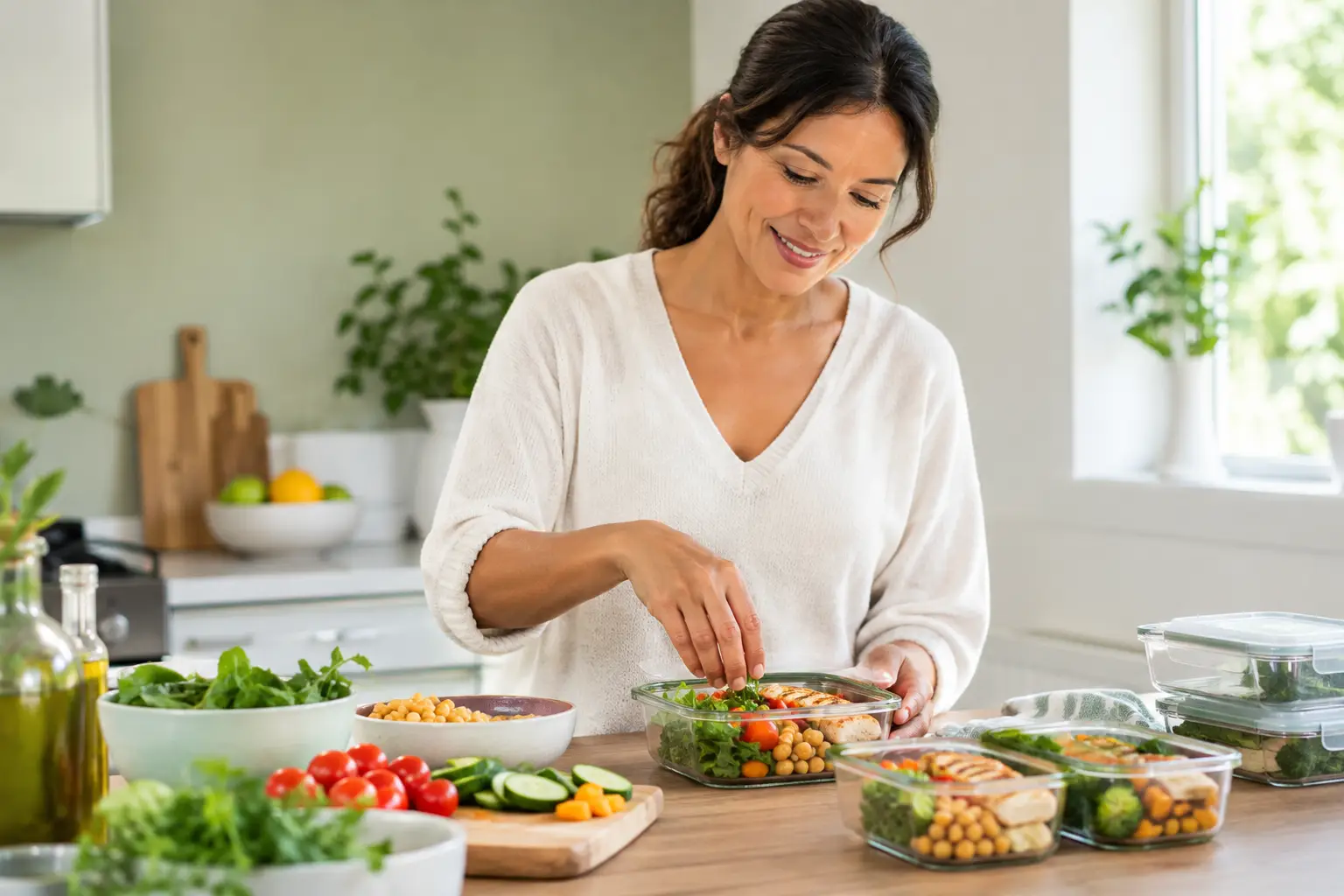
Workday meal planning starts with a few familiar meals, a short grocery list, and backup options for busy days. Include varied protein foods, vegetables or fruit, and fiber-rich grains or legumes across your day, while adapting portions to your needs. This can simplify decisions, but it cannot guarantee steady energy or replace advice for a medical condition.
Try BioNavs: describe a meal and choose a goal to receive an estimated meal-quality score of 0–100 and practical suggestions. A photo is optional; a description helps clarify ingredients and portions.
A Workday Meal Planning System Starts With Anchors
Instead of planning every bite, choose two or three meal anchors for the week. An anchor is a reliable meal or component you genuinely like, can make quickly, and can adjust based on what is available. It gives you a starting point when time is short.
A practical breakfast anchor might be Greek yogurt with berries, chopped walnuts, and high-fiber cereal. On another day, it could be eggs with spinach, whole-grain toast, and fruit. These are examples of combining several food groups; choose portions and ingredients that suit your appetite, preferences, and any dietary advice you follow.
For lunch, think in components rather than recipes. Start with a protein such as chicken, salmon, tofu, beans, lentils, cottage cheese, or leftover turkey. Add produce, then choose a satisfying carbohydrate like brown rice, a baked potato, corn tortillas, quinoa, or whole-grain bread. Finish with flavor and fat: avocado, olive-oil dressing, seeds, cheese, or hummus.
This is more flexible than assigning “salad Monday” and hoping your future self stays interested. If a bagged salad kit does not already include enough food for your needs, chicken, tofu, or chickpeas are possible additions. Check what is already included before adding more. Leftover roasted vegetables can go into a grain bowl with canned tuna and a lemony dressing. Convenience foods are not a planning failure. They are often what makes a plan usable.
Why Meal Composition Matters More Than a Perfect Menu
Meal composition and amounts both matter. A salad may already include beans, chicken, grains, nuts, or dressing; its name alone does not tell you what it contains. Before suggesting an addition, check the ingredients and approximate portions. A detail omitted from a description is not necessarily absent from the meal.
A useful question is, “Does this meal fit my needs, and is there one change that would make it more practical or enjoyable?” If a meal has little protein, you could include eggs, yogurt, tofu, fish, chicken, beans, or lentils. If it already has a suitable protein source, there is no automatic need to add another.
Beans, vegetables, fruit, oats, and whole grains can contribute fiber. The FDA identifies these foods as fiber sources and notes that fiber may help with fullness. That is general nutrition information, not a promise about how long a particular lunch will satisfy you. Nuts, seeds, avocado, and olive oil are other possible ingredients; consider what the meal already contains and how much you use.
You can plan meals without counting every calorie, while still recognizing that portions and total energy intake matter. Convenience foods can fit too: compare labels when useful, including fiber, sodium, and added sugars, rather than judging a food by packaging alone.
Build Your Week Around the Friction Points
Most workday eating problems happen at predictable moments: the morning when you oversleep, the lunch hour booked with calls, the commute home, or the evening when everyone is hungry at once. Plan for those moments specifically.
If mornings are rushed, assemble breakfast the night before or keep a short list of five-minute options. If you regularly eat lunch at your desk, stock foods that do not require a full kitchen. Shelf-stable tuna or salmon packets, low-sodium soups, whole-grain crackers, nuts, fruit, and single-serve bean cups can turn a sparse office lunch into something more balanced.
For the afternoon, consider whether you want a snack and what is practical to keep available. An apple with peanut butter, edamame with a piece of fruit, cottage cheese with tomatoes, or a small handful of nuts alongside yogurt are possible combinations. Appetite and satisfaction vary, and you do not need a snack simply because it appears on a plan. Consider the time until dinner, your hunger, and the size of lunch rather than using a fixed snack schedule.
Keep one backup meal at home for late workdays. Frozen vegetables, a microwaveable whole grain, eggs, and canned beans can become dinner in minutes. Frozen shrimp with vegetables and rice works, too. A backup meal gives you another option when cooking from scratch is inconvenient.
Use a Short Prep Session, Not a Sunday Marathon
If a long weekend cooking session does not suit you, prepare a few versatile ingredients and leave room for fresh choices.
Try washing and chopping vegetables, cooking one grain, and preparing or buying two protein options. You might roast chicken thighs and make a pot of lentils, then use them differently across several meals. One day that is a lentil-and-vegetable soup with toast; another, it is a chicken bowl with rice and salsa; later, it becomes a wrap with greens and hummus.
If repeated meals become unappealing, keep the base simple and change the sauce, seasoning, or format. Mediterranean flavors, taco bowls, stir-fries, and sandwiches can use many of the same ingredients without tasting like the same meal.
A grocery list also works best when it reflects your actual week. If you have two lunches out, do not shop as if you will pack five elaborate lunches. If Wednesday is your busiest day, buy the easiest option for Wednesday. Planning honestly is more valuable than planning optimistically.
Keep Prepared Meals Safe
Planning ahead also means planning storage. Refrigerate perishable leftovers promptly, within two hours, or within one hour in hot conditions such as a hot car. Use refrigerated leftovers within three to four days. Freeze portions intended for later in the week rather than keeping a full week of cooked meals in the refrigerator. Follow any shorter storage directions on the product.
When carrying perishable food to work, use an insulated bag with two cold sources and refrigerate it when you arrive if a refrigerator is available. Keep cold food at 40°F (4°C) or below. FoodSafety.gov recommends an insulated container for hot food, kept at 140°F (60°C) or above. A desk drawer is suitable for unopened shelf-stable items stored according to their labels, not for yogurt, cooked chicken, or other perishables.
How to Make Workday Meal Planning More Personal
Use your schedule, food preferences, budget, and appetite to decide what is workable. Start with tomorrow's breakfast and one dependable lunch, then change one element if useful. You do not need to buy a new set of ingredients for every recipe.
Keep observations modest: “I liked this lunch and it was easy to pack” is useful feedback. Feeling tired after eating has many possible explanations; a meal description cannot identify the cause. Persistent or concerning symptoms deserve medical attention rather than repeated food experiments.
An AI meal-quality review can offer educational suggestions based on what you describe, but it relies on assumptions when details are missing. Ingredients, amounts, recipes, and preparation methods can change the estimate, and model interpretations may vary. Correct the input before acting on a suggestion. A high score does not show a measured glucose response, guarantee fullness, diagnose a condition, or establish that a meal suits a prescribed diet.
Sources & Further Reading
- Dietary Guidelines for Americans, 2025–2030, 10th edition, HHS and USDA. Current edition and general guidance on varied, nutrient-dense foods.
- Dietary Fiber, FDA Interactive Nutrition Facts Label, October 2021. Food sources of fiber and general information about fullness.
- Food Safety Tips for Dining Out, CDC, reviewed August 31, 2026. Prompt refrigeration and a three-to-four-day limit for refrigerated leftovers.
- Back to School Meal Prep as Easy as 1, 2, 3, 4, FoodSafety.gov. Insulated bags, two cold sources, and safe cold/hot holding temperatures for packed food.
BioNavs supports informed wellness choices. Explore the BioNavs site.