
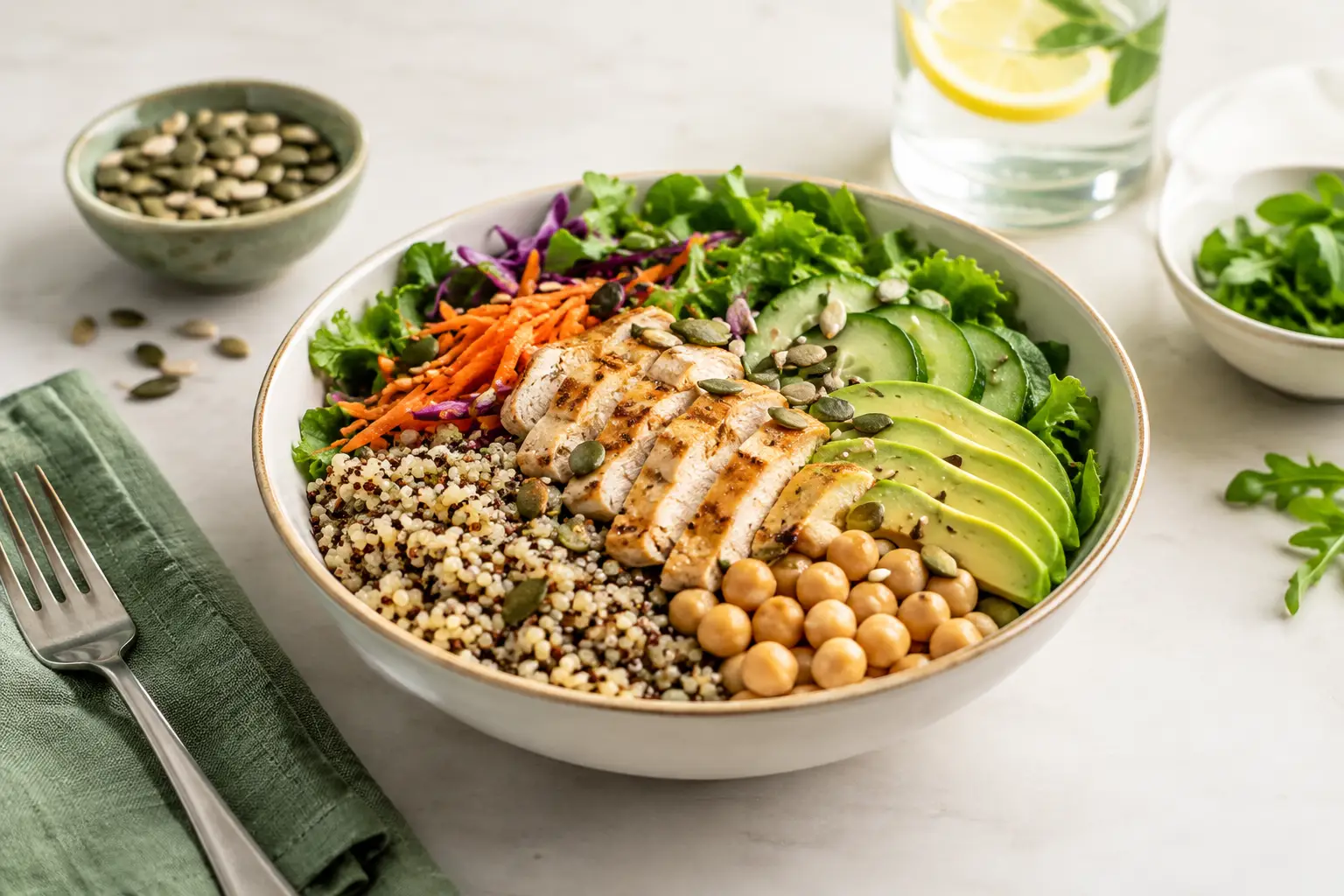
High-fiber lunch ideas include bean salads, lentil soup, whole-grain wraps and grain bowls with vegetables. Build from one or more fiber-rich plant foods, then consider protein foods and portions that fit your needs. These 12 examples are practical options rather than tested rankings; actual fiber depends on ingredients and amounts, and no lunch can guarantee steady energy or prevent afternoon tiredness.
What makes a lunch high in fiber and satisfying?
Fiber comes from plant foods: beans, lentils, vegetables, fruit, whole grains, nuts, seeds, and avocado. But a high-fiber lunch is not automatically a balanced one. Lentils provide both fiber and protein. Whether a bowl of soup needs an addition depends on its recipe, portion and your appetite; extra chicken, tofu or bread is not automatically necessary.
Use a flexible plate check: identify a fiber-rich food, a protein food and some produce, allowing for overlap such as beans or lentils. Olive oil, avocado, nuts or seeds can be included according to preference and portions. This is a meal-building guide, not a formula for how long you will feel full.
Fiber recommendations vary by age and sex; individual health needs and the rest of your diet also matter. Rather than chasing a perfect number at every meal, make lunch one of the places where plants clearly show up. Increase fiber gradually, and drink fluids appropriate to your needs. A sudden large increase can be uncomfortable. If you have a prescribed diet, digestive condition or fluid restriction, discuss changes with your clinician or registered dietitian.
12 high-fiber lunch ideas for work and home
1. Chicken, white bean, and chopped vegetable salad
Toss rotisserie chicken with canned white beans, chopped bell pepper, cucumber, tomatoes, arugula, olive oil, lemon, and a little feta. The beans make this feel like lunch, not a side salad, while chicken brings protein without cooking from scratch. Add a piece of fruit or whole-grain crackers if you need more substance.
2. Lentil soup with a turkey sandwich
Store-bought or homemade lentil soup is a reliable fiber base. Pair it with a turkey sandwich on whole-grain bread, layered with spinach, tomato, mustard, and avocado. The soup already contains protein from lentils; the sandwich is one option when you want a larger meal. Check sodium on packaged soup and deli meat labels.
3. Burrito bowl with black beans
Build a bowl with black beans, grilled chicken or shrimp, fajita vegetables, salsa, shredded lettuce, avocado, and a modest scoop of brown rice. The beans and vegetables carry the fiber, with additional protein and fat from the other ingredients. At a fast-casual restaurant, this is usually easier to order than trying to assemble a perfectly customized salad.
4. Tuna and chickpea pita pocket
Mix tuna with chickpeas, celery, diced pickles, Greek yogurt or olive-oil mayonnaise, and black pepper. Stuff it into a whole-wheat pita with greens. Chickpeas stretch the tuna, add texture, and bring fiber to a lunch that might otherwise be mostly protein and refined bread.
5. Leftover grain bowl with roasted vegetables
Use last night's roasted broccoli, Brussels sprouts, carrots, or squash over farro, quinoa, or brown rice. Add leftover salmon, chicken, tempeh, or baked tofu, then drizzle with tahini-lemon sauce. This is especially useful when you have small amounts of several leftovers that do not look like a meal on their own.
6. Mediterranean plate with hummus and edamame
Pack hummus, shelled edamame, sliced peppers, carrots, tomatoes, olives, whole-grain pita, and a few cubes of cheese or hard-boiled eggs. It is snack-like in format but substantial in composition. The key is making sure the plate includes both a clear protein source and enough fiber-rich foods, rather than relying on crackers alone.
7. Chili topped with vegetables
Bean chili is one of the most forgiving high-fiber lunches. Use a turkey, beef, chicken, or vegetarian version, then add diced onion, cilantro, jalapeno, avocado, and a spoonful of plain Greek yogurt. If you want more fiber in a chili bowl, consider the amount of beans and vegetables alongside any rice or chips, then adjust portions to appetite.
8. Farro salad with salmon and berries
Combine cooked farro with salmon, arugula, chopped cucumber, tomatoes, walnuts, and a vinaigrette. Have berries on the side. Farro has a pleasantly chewy texture and generally holds up well for meal prep, which makes it a good alternative for people bored with rice-based bowls.
9. Veggie-loaded wrap with a bean spread
Spread hummus or mashed black beans on a whole-grain wrap, then add sliced turkey, chicken, tofu, or roast beef with spinach, shredded cabbage, peppers, and avocado. Cabbage is particularly helpful here: it adds crunch and volume without making a wrap watery by lunchtime.
10. Baked potato stuffed with broccoli and cottage cheese
A baked potato with its skin provides some fiber; beans and broccoli can add more. Split it open and fill it with steamed broccoli, cottage cheese, black beans, salsa, and a sprinkle of cheddar. If you want additional protein, leftover shredded chicken is an option; it is not required when the existing portion meets your needs.
11. Peanut noodle salad with tofu or chicken
Use whole-wheat noodles or edamame noodles with shredded cabbage, carrots, snap peas, cilantro, and tofu or chicken. Toss with a peanut-lime sauce. This is a good option for people who want a lunch that feels comforting and flavorful, not like diet food. Keep the sauce generous enough to enjoy, but use vegetables and protein to make it more than a bowl of noodles.
12. Quinoa taco salad with corn and beans
Start with romaine or shredded cabbage, then add quinoa, pinto beans, corn, tomatoes, chicken or ground turkey, salsa, and avocado. A small handful of crushed tortilla chips can bring the crunch without turning the whole bowl into chips with toppings. This is also an easy family dinner leftover to pack the next day.
How to improve the lunch you already eat
You do not need to replace every sandwich, soup, or takeout order. Often, one addition changes the balance. Add a cup of bean-based soup to a sandwich lunch. Choose whole-grain bread and add avocado to turkey and cheese. Order extra vegetables and beans in a rice bowl. Stir frozen vegetables and canned lentils into leftover pasta.
The most useful change depends on what is missing. If lunch has protein but almost no plants, add beans, vegetables, fruit, or a whole grain. If it has fiber-rich foods but feels skimpy, review the overall portion and protein before choosing an addition. Hunger after lunch can reflect several factors; a description alone cannot identify the cause.
A three-step check without another food diary
When lunch is in front of you, describe it plainly: “Turkey sandwich on wheat with chips and an apple,” or “Chicken burrito bowl with rice, beans, cheese, and salsa.” Then look for the pattern, not a grade on your character. Is there a meaningful fiber source? Is protein doing enough work? What is one realistic adjustment next time?
When an ingredient or amount is not stated, clarify it rather than treat it as absent. For example, ask whether a sandwich uses whole-grain bread and how much bean soup accompanies it before recommending another side.
If you are choosing a tool for this review, see our meal analyzer comparison: uses and limits.
Try one familiar lunch
Try BioNavs: describe your lunch to receive an estimated 0–100 meal-quality score and practical suggestions. A photo is optional, and a description helps clarify ingredients and portions. The score does not measure glucose, diagnose the cause of tiredness or promise changes in energy or blood lipids.
Sources & Further Reading
- HHS/USDA: current Dietary Guidelines for Americans, 2025–2030, for overall food-pattern guidance.
- CDC: Tips for Healthy Eating for a Healthy Weight, for practical food choices.
- NIDDK: Eating, Diet, & Nutrition for Constipation, for fiber sources, gradual increases and fluids. This source does not establish that a lunch prevents fatigue.
BioNavs supports informed wellness choices. Explore the BioNavs site.