
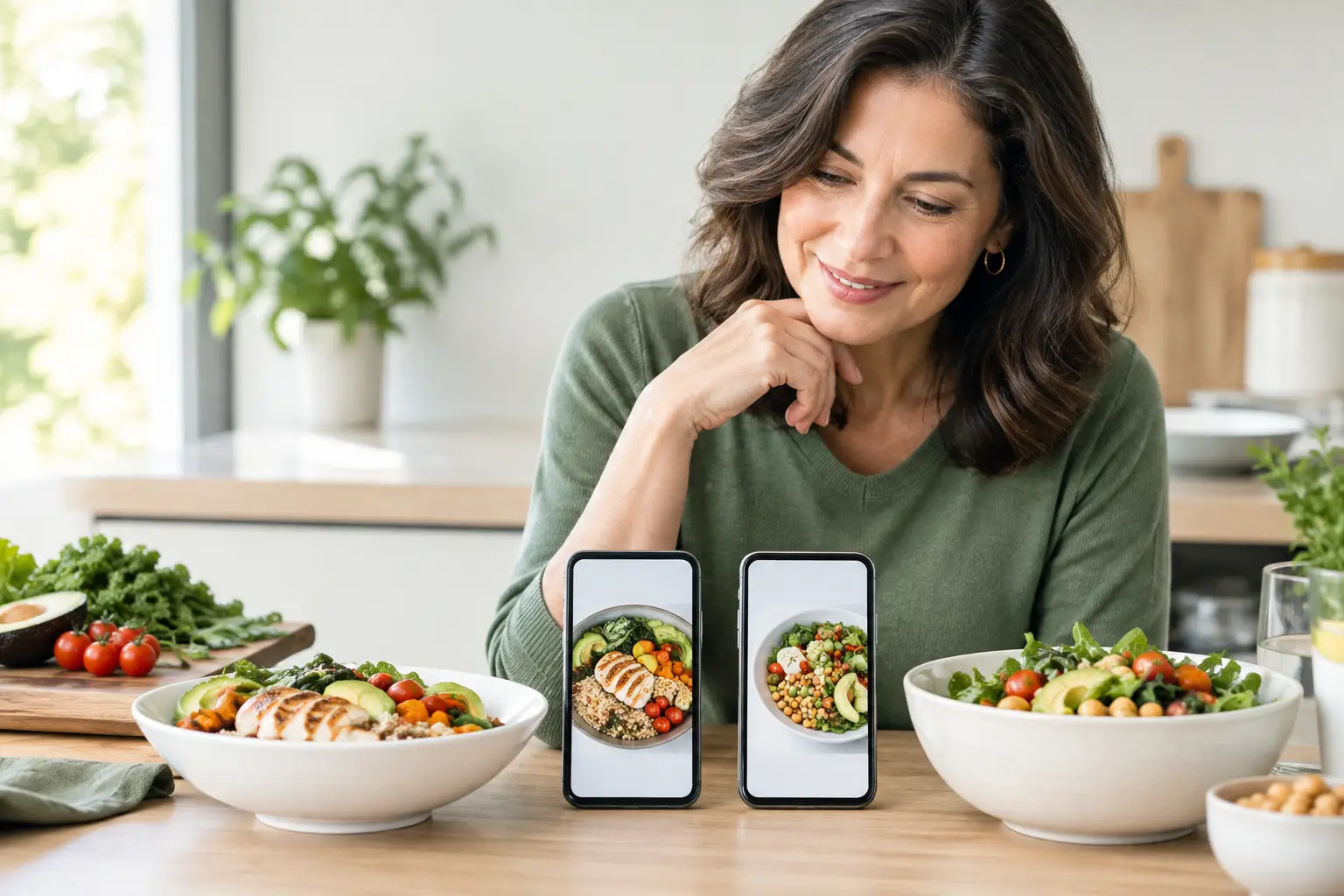
Compare meal analyzers by the record you need: calorie and nutrient estimates, a visual food log, or practical feedback on meal composition. Check how each tool handles portions, missing ingredients, privacy and corrections—not just whether it produces a score. None of these inputs can establish your personal glucose response, explain fatigue or diagnose a condition.
This guide compares approaches, not named products tested head to head. It is published by BioNavs, which offers a meal-analysis tool.
What a Meal Analyzer Should Actually Analyze
Meal analysis tools often combine several approaches: calorie and nutrient tracking, photo-based food logging, and feedback on meal composition. The categories overlap, and available features vary by product.
- Database-based tracking: useful for recording estimated energy and nutrients. Accuracy depends on database entries, recipes and portions; logging is not a laboratory measurement.
- Photo-based logging: useful for a visual record of visible foods. Hidden ingredients, cooking fats and portions may need a description or correction.
- Description-based meal feedback: useful for reviewing ingredients and meal balance. Omitted details remain unknown; a score is an estimate, not a physiological measurement.
A database-based food diary can provide a detailed intake record, but its totals are still estimates. You search a database, select brands, enter portions, and often weigh ingredients. That can work for people who enjoy detailed tracking or need a specific intake record. The trade-off is friction. Logging a turkey sandwich may involve separate entries for bread, deli meat, mayonnaise, cheese and a side salad.
Photo recognition tools reduce some of that work. You take a picture, and the app identifies visible foods. They are convenient when the plate is clear and portions are easy to see. But a photo may not reveal what is inside a burrito, how much dressing was used, whether the yogurt is sweetened, or if that stir-fry includes a meaningful amount of protein.
A composition-focused analyzer begins with the meal as you actually describe it: “Two eggs, whole-wheat toast, berries, and coffee with half-and-half.” Rather than requiring you to calculate calories, it looks at the building blocks of the meal - protein, fiber-rich plants and carbohydrates, fats, and the likely balance of the whole plate. The best version gives you one realistic improvement, not a scolding list of rules.
Meal Analyzer Comparison: The Features That Matter
When comparing tools, prioritize the kind of feedback you will use on an ordinary Tuesday. A highly detailed report is not automatically helpful if it requires more effort than you can sustain.
1. Does it assess the whole meal, not just the total?
Calories tell you how much energy is present. They do not explain whether your lunch has enough protein to be satisfying, whether your carbohydrate choices come with fiber, or whether vegetables have been pushed off the plate by refined snacks.
Look for feedback that considers meal composition. For example, a lunch of chicken noodle soup and crackers is not “bad.” If the recipe and portion provide little fiber or produce, a useful analyzer could suggest a side salad, an apple or beans. It should first check the description rather than assume an ingredient that was not mentioned is absent. That is more actionable than receiving a number with no context.
2. Can you log real meals in plain English?
The best system is the one you will still use after the first motivated week. If you regularly eat at restaurants, share family dinners, or make quick work lunches, you need a tool that handles imperfect descriptions.
“Burger, side salad, and fries” is enough to start a helpful conversation about balance. So is “rotisserie chicken, bagged salad, and rice” or “oatmeal with peanut butter and banana.” You should not need a food scale to reflect on whether your meal has a protein anchor and fiber-rich foods alongside a portion that suits your needs.
Plain-language entry also makes patterns easier to notice. You may find that breakfasts are consistently low in protein, restaurant lunches rarely include produce, or dinners feel balanced until late-night grazing follows. Those are practical observations, not reasons for guilt.
3. Does it give one change you can realistically make?
Generic advice such as “eat healthier” does not help when you are standing in a drive-thru or packing lunch at 7 a.m. The strongest meal feedback identifies the smallest meaningful adjustment.
For a bagel with cream cheese, that could be adding two eggs or Greek yogurt and fruit rather than banning the bagel. For pasta with marinara, it could be adding turkey meatballs, white beans, or a side of roasted vegetables. For takeout tacos, it might mean keeping the tacos and adding black beans or choosing a side salad when available.
The point is to build a repeatable habit of checking what is known about the meal. If a protein food or fiber-rich ingredient is missing from the description, clarify that detail before deciding whether to add anything. Portions and appetite also matter.
4. Does the score explain itself?
An estimated 0–100 meal-quality score can be useful because it makes reflection quick. But a score without a reason is just another grade. You should be able to see why a meal landed where it did and what would move it in a better direction.
A lower score is not a judgment or a clinical result. It may reflect the tool’s assumptions, incomplete information or a different balance of ingredients. Check the explanation and correct the input before changing your meal. An airport breakfast also has different practical constraints from a home-cooked dinner.
5. Does it support habits instead of obsession?
Detailed tracking may feel burdensome if you feel obliged to account for every bite. For some people, a less detailed approach may be easier to maintain. It uses meals as learning opportunities. You describe what happened, see the composition, and carry one insight into the next meal.
In midlife, the practical questions may include how to include protein foods, fiber-rich plants and portions that fit your appetite. A tool can help organize that review; it cannot verify muscle preservation or promise consistent energy from a meal description.
Where Different Tools Fit Best
There is no single winner for every person. A detailed calorie tracker may fit someone who enjoys data entry and wants detailed estimated records. A photo app may be handy for quick visual logging, particularly when meals are simple and recognizable.
A plain-English meal analyzer may suit someone who wants feedback without maintaining another food diary. It is designed for the person who wants to check a work lunch, reconsider a restaurant order, or review the ingredients and portions in a familiar breakfast.
You can also discuss a meal record with a registered dietitian. An analyzer can help you notice meal patterns between appointments and arrive with clearer questions. It is educational guidance, not a diagnosis and not a substitute for individualized medical or nutrition care.
A Simple Test Before You Commit
Try entering three meals you eat often: one breakfast, one rushed lunch, and one dinner you genuinely enjoy. These high-fiber lunch ideas offer examples you can adapt. Then ask whether the feedback is specific enough to use.
If the tool merely reports totals, it may not change how you build your plate. If it asks for more detail than you can provide, it may not last. If it helps you identify a realistic addition or swap - without labeling foods as good or bad - it is probably doing its job.
The most helpful meal analyzer does not make you fear a restaurant burger or regret a slice of pizza. It helps you recognize that adding a protein-rich side, vegetables, fruit, or beans can change how a meal supports your day. Useful feedback should make its uncertainty clear.
Try one meal
Try BioNavs: describe a meal to receive an estimated 0–100 meal-quality score and practical suggestions. A photo is optional; a description helps clarify ingredients and portions. BioNavs does not measure glucose or your body’s response, diagnose conditions or guarantee changes in hunger or energy. If tracking or scoring food causes distress, a different approach with a qualified professional may be more suitable.
Sources & Further Reading
These sources inform the general food-pattern guidance; they do not validate or endorse a particular app or score.
- HHS/USDA: current Dietary Guidelines for Americans, 2025–2030.
- CDC: Tips for Healthy Eating for a Healthy Weight.
BioNavs supports informed wellness choices. Explore the BioNavs site.